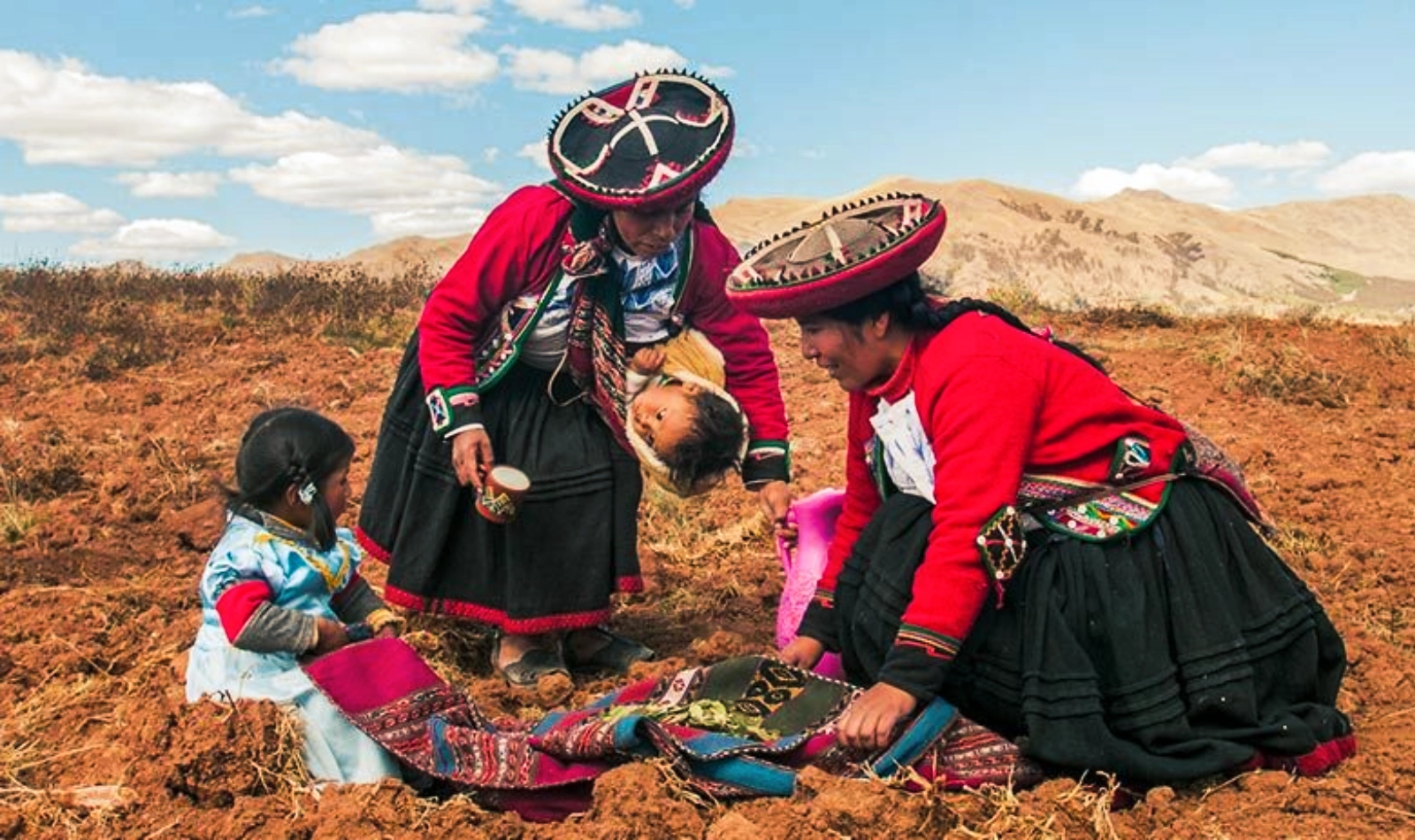
Pachamama Ceremony: Andean Spirituality in Deep Peru

In the Peruvian Andes, the land is not just a resource: it is a living being that deserves thanks, care and reciprocity. This worldview comes to life in the Pachamama ceremony, also known as a payment to the earth or despacho. For travelers who want something deeper than standard sightseeing, joining a ceremony guided by local teachers is one of the most meaningful ways to approach “Deep Peru”. It is a cornerstone of any Andean spiritual tour in Peru.
Table of Contents
Who is Pachamama?
In Quechua, Pachamama translates roughly as “Mother Earth”. In Andean thought she is the source of life, crops and animals. Communities give thanks to her before planting, harvesting or starting an important journey, and in many places a first sip of a drink is poured out for her. This is not a show invented for tourists: it is a living practice that many families maintain.
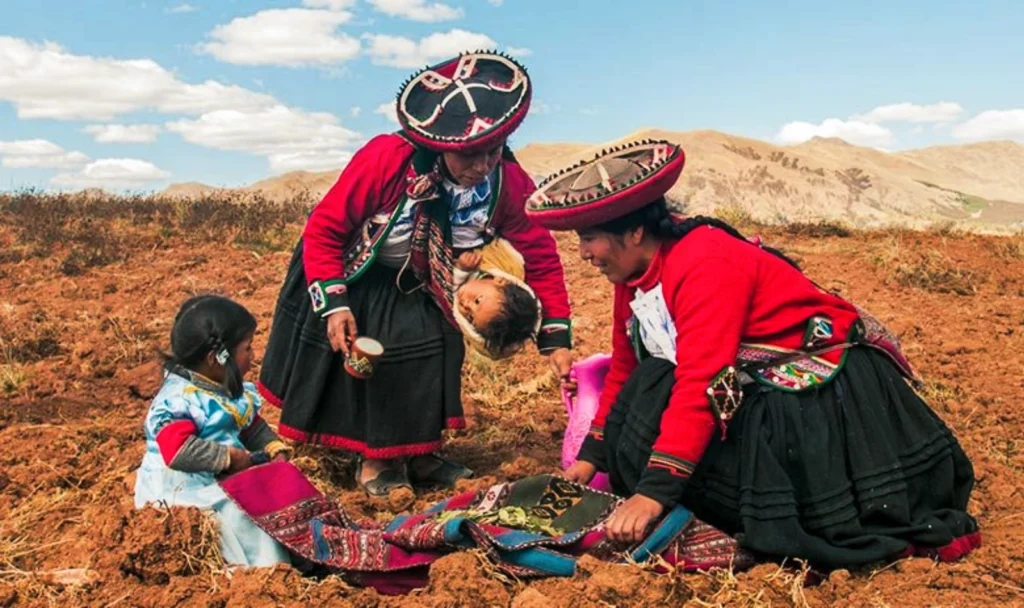
The Apus: sacred mountains
The Apus are the spirits of the mountains, seen as protectors of villages and valleys. In the Cusco region, well-known Apus include Ausangate, Salkantay and Apu Wakaywillka (Veronica). Each community has its own reference Apus, and people ask them for permission and protection. When you visit places like Machu Picchu or the Sacred Valley, you are in a landscape that is full of spiritual meaning for Andean people.
What is a despacho?
The despacho, sometimes called a haywarisqa or simply “payment”, is an offering prepared by an Andean specialist (known as a paqo or altomisayoq depending on tradition) on a woven cloth. It is made of symbolic elements that can vary by teacher and intention:
- Selected coca leaves, offered as a sign of respect.
- Seeds, grains and flowers, linked to abundance.
- Sweets, colored wool and other symbolic items that express gratitude.
Each participant typically holds a few coca leaves, breathes their intention or thanks into them and hands them to the teacher. The bundle is then wrapped and buried or burned, returning it to the earth. Details vary by region and by the teacher’s lineage, so don’t expect one fixed formula.
The coca leaf in Andean culture
The coca leaf is central to Andean life: it is chewed, brewed as tea and used in rituals. It is important to separate the traditional leaf from the illegal use of its derivatives. In a ceremony, the leaf is a way of communicating with the earth and the mountains, not a recreational substance. If you drink coca tea, do so in moderation, and check your home country’s rules before trying to bring coca products back, as they are prohibited in many places.
What to expect
A ceremony is usually held in a natural setting or in a community, led by a teacher who explains the meaning in Quechua or Spanish, with translation when needed. It may last one to two hours, with moments of silence, explanation and offering. It is not a performance: it can be moving or simply peaceful, and everyone experiences it differently. No particular religious belief is required, only a willingness to listen.
How to take part respectfully
- Ask before taking photos or video; at some moments it is better to put the camera away.
- Dress comfortably and simply; avoid flashy clothing.
- Follow the teacher’s guidance and the rhythm of the ceremony without interrupting.
- Avoid treating it as entertainment or an exotic spectacle; it is a practice of faith.
- Accept that some things won’t be fully clear to you, and that is fine.
- If possible, make sure the community or teacher is fairly compensated, through a responsible operator.
Where to experience Andean spirituality
Ceremonies are most often held in the Sacred Valley, in communities near Cusco and in high Andean areas. The setting matters: valleys, mountains and archaeological sites help you see how landscape and spirituality connect. Our Treasures of the Andes tour includes a Pachamama ceremony along with the Sacred Valley, Machu Picchu, Vinicunca and Lake Titicaca. For a shorter trip, Cusco Top covers Cusco, the Sacred Valley, Maras-Moray and Machu Picchu in five days.
Frequently asked questions
Do I need to be religious to take part?
No. You only need respect and curiosity. Nobody will ask you to adopt a belief.
Is the ceremony authentic?
It depends on who leads it. Choose operators who work directly with local teachers and communities and who explain clearly what you will experience.
Can I take photos?
Always ask the teacher first. At certain moments photography is discouraged.
Does altitude matter?
Many ceremonies take place at high elevation. Spend a few days acclimatizing and talk to your doctor if you have health concerns.
If you would like to live an Andean spiritual experience with respect and local guidance, contact Deep Peru Travel. We will help you design a journey that connects you with the real heart of Peru.
Design your tailor-made trip
Don't let them tell you about it. Experience the authentic Inca Trail with local experts.
Book AdventureTours Recomendados
More Reads
November 18, 2026
November 18, 2026
November 18, 2026





Leave a Reply